Okay; so here I am, galley finally put together and done…I wanna make a final pass before I get it printed, but in the meantime, I am coming up with a fundraising campaign, prior to the book’s launch.
I’ve already got stretch goals set up; well, written down on a list…and I’ve even got targets and an ultimate goal; but now, dear Acolytes, you accompany me into my first foray into the unknown territory of crowdsourcing and fundraising.
This is one that I didn’t expect to be on the lesson plan; because the first thing I have, is a bunch of fucking questions I don’t know how to answer. Well, more precisely, questions whose answers I will have to research.
QUESTION ONE: Okay…how do I create buzz around this book?
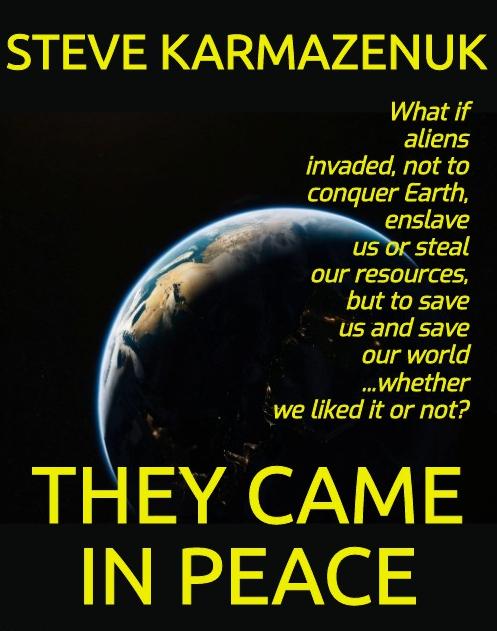
Doesn’t that look all fancy and official?
Okay; so driving buzz does require having some form of social media presence; like I said, I’ve migrated to BlueSky, and I cannot endorse such flaming piles of shit like the Website Formerly Known as Twitter, or the Facebook. However, I can’t recommend Tumblr enough for aspiring writers and artists. I used to be on there, but there was drama and well…you young’uns probably know more social media sites than I’ve listed; like Discord, Reddit, Threads, Oingo-Boingo, Talking Heads…oh wait; those last two are bands from the 1980s New Wave era.
So if you have an established SM presence, you simply join the groups/chats/whatever about writing, or creativity in general, and then you post there and to your own followers about your work. That’s the first stage.
Second stage buzz-creating: Drive them from your Social Media to your weblog, by having a link in your bio, and dropping the occasional post to your followers and mutuals to get them to go have a look.
It also helps if you play with the #WritingPrompts hashtag on those sites, to create quick and clever microstories (Character-Limit long.)
Put some content on your social media; put the same content on your blog. Now you’re cooking. You should, once you’ve made friends with readers, writers and other creatives start seeing more aggregation of like-minded people following you; follow back! Initiate follows.
Don’t go looking for free advice from big authors like Stephen King or…you know, I don’t know of any other big authors on social media that I follow. I mean, they MUST be out there…but anyway, they’ve been exhausted by advice-seekers their whole career. At best, you’ll get ignored. The best people to talk to are your fellow indies; we, like you, have had to do the whole thing ourselves – and now you can benefit by avoiding the mistakes WE made and make entirely new and original mistakes all your own! As you well know, there’s nothing a writer loves more than talking about their work and themselves. Writing is a very narcissistic process, and indies are hungry for coverage and sales. We’ll talk your ear off, blog your eyes dry, etc.
But yeah, indie writers? We’re a dime a dozen, yeah, but the Indie Publishing industry is actually fairly solid, and hungry; as long as your books are properly edited (don’t do it yourself) and formatted (Submission guidelines are HOLY SCRIPTURE,) you’re bound to make connections. Don’t half-ass it by trying to edit and design your cover yourself; I’ve done that, and it ends up making something you love into an embarrassment.
Places like Fiverr and other Gig Posters are a great place to find people who are studying editing and writing to work on your book – and there are countless illustrators online; even if it means you have to wait and put money aside to pay for proper editing and a proper book cover, you want to use their help, and give them credit in your book’s acknowledgements and make sure to include “Cover Art copyright [NAME] used with permission” line, because it IS their work and you paid for permission to use it, and, they want to make money off their work so if you give them credit, somebody else might use them for their book jacket. Same thing goes for reviews, but you DON’T EVER NOT EVEN ONCE pay for a review: there are people who will review your work – FOR FREE – because they can actually MAKE A LIVING reviewing indie books for their webpages or something.
But, I’m getting ahead of myself; you’re not looking for reviews – yet – your book isn’t even ready to roll.
You’ve got the galley edited and ready, cover art is commissioned (Best let them design it, although you can have input; the cover of They Came in Peace was inspired by a view of the occultation line between night and day taken from the International Space Station, and the artist liked my idea and ran with it) you already know that Draft to Digital is the best game in town for self-publishing, and you’re nearly ready to roll. You’ve got your followers, mutuals, and you’ve got people who will occasionally see your posts in your feed. Okay. Level One-A accomplished.
Thing is, if you publish your book now? Chances are good it’s gonna fail. Pimping a book out requires a minimum amount of marketing money. Oh, fuck; you’re broke as hell and it already hurt to save up and take time to pay for editing and a cover! Now you have to pay for MARKETING?
Yup!
And THAT’S why you don’t want to publish, yet. I mean yes, it’s always a good idea to have the .epub ready to go, but you can generate a book on D2D without “launching” it right away.
QUESTION TWO: So how the fuck do I pay for marketing?
You don’t: You get other people to pay for it, for you.
Wait; what?
Did I stutter? Your first marketing campaign is to FUNDRAISE for your book launch. There’s Kickstarter, Gofundme, Co-fee or something…there are many available options. All you need to do is come up with some reasonable push-goals; for example, a digitally signed copy of the ebook, early edition or pr eorders, or if they donate enough an autographed physical copy of the book, online meet and greets, etc. The goal of each goal of your fundraising campaign is to pay for the NEXT goal, and the next, and then, when you’ve hit your final target, you have the money to pay for marketing.
Okay, so where do I go to pay for marketing?
Wow; you want everything on a silver platter, don’t you?
Hey, this post was your idea, not mine; you took my nickel, I paid for the ride.
You realize you’re just talking to yourself right now, right?
Do you?
Okay, so there are myriad online publicity agencies. An ad run or marketing run could cost you a few hundred or a few thousand dollars; how much money you raise will determine how big your campaign will be.
So you start looking at marketing before you start fundraising. You’ll want to check out as many online marketing agencies as you can. You’ll want to filter out anyone who isn’t specialized in books or other creative endeavors. You’ll want to talk to people who will know where your ads are going to be the most effective. You’ll want to avoid being put in a pop-up, and you’ll want your ad to be tailored to a specific client, namely, people who would be interested in reading your book.
Next you gotta check and see if these agencies are actually worth the money, who’s used them, what they’re known for…and you might want to filter it down to the genre or even subgenre if they specialize in that sort of thing. You want the ad campaign to be tailored to you as much as possible; a preplanned package might not be what you’re looking for, so don’t be afraid to express that; right now you’re just trying to test the waters, so you can answer my questions three:
1-How much money do you think you can reasonably fundraise?
2-How much money do you want to spend on advertising?
3-How much do money you want to keep for yourself, up-front?
The first two questions are simple arithmetic. The third one depends on how much you think your time is worth given everything you’ve done up to this point, from coming up with the idea, to writing, rewriting, beta-reading, editing, etc. The Rule of Thirds works well: Two thirds of what you raise should be for your campaign. The last third is yours.
A lot to take in, right? Because now we have to talk about SCHEDULING. Because, you don’t want to make your book available until it’s been hyped and buzzed, right?
Timetables are going to be based on how long it takes you to fundraise, how much you fundraise, and how big your campaign is.
Patience is the key; your book’s ready. It’s not going anywhere. There’s no expiry date on when it can launch.
And, guess what else:
You’re going to want to research book launch dates.
You guessed! Yep; you’re going to want to have a look at what books released when, going back a couple of years, just to see what time the tide comes in for your genre.
Yeah, you might have wanted to launch sooner rather than later – believe me, I know the feeling. Had my book been launched six months to a year earlier, it would have had a better chance, given I was at the time with a small press. But right after it launched, we went into lockdown. COViD killed They Came in Peace.
So, I’ve taken the intervening time to rest, recuperate, and try writing other things. But, I’ve kept getting drawn back here, to this book; and honestly, given the times we’re currently living through? I’d rather put it out there yesterday.
But without the right hype, it won’t have the legs to run.
Tune in next time for an exciting new episode!
Tag: science fiction
-
WRITING LESSON: Executive Dysfunction
-

Ten Years…
It’s actually been a little longer than 10 years, but, I have been working on They Came in Peace, in one form or another, for most of the last decade.
It was a difficult ten years: after I separated from her, I struggled with PTSD from living with a controlling, emotionally and psychologically abusive ex-wife; self-medicating with alcohol, dealing with an undiagnosed behavioral disorder I was desperately trying to get help for…and my world continued getting worse as I struggled with myself, with nightmares and with behaviors I couldn’t control.
I watched as the people I love left me: friends, one by one, either ghosting me or getting fed up of my shit. I ended up alienated from so many people; but honestly, but for a small few, the only people I miss are my children. The only relationships I long to rebuild are the ones I had with my children. My ex-wife did all she could to keep them from me, but she wasn’t doing this to protect them; just to hurt me, because she knew that the greatest joy and privilege of my life is being a father. And in those dark years, the only thing that ever brought me a sense of joy, a sense of peace, was when I could see my children. I was always loving, nurturing positive and happy when I was with them. I only ever tried to be the best person I could when they were in my life.
In the end, all I had left were my nightmares and my solitude. In those early years, those nightmares were tamed when I put them to page in cogent form, creating They Came in Peace: I’ve written about how that book is the only thing that stopped my nightmares; it’s also the only thing that kept me going, when I wasn’t allowed to see my children, when I didn’t even have a friend in the world to talk to.
Writing is cold comfort compared to the loving warmth of family and friends, but this book is important to me, and I think the messages within, both implicit and explicit, are timely and, frighteningly, urgently need to be expressed.
I’m down to the last twenty or so chapters of the trade galley rebuild, then I’m going to take one more pass – just to make sure I didn’t miss anything, and then it’s going to print; well, eprint, I guess. Twenty chapters is a LOT fewer than it sounds; I’ll have this thing ready to download by spring.
[the sound of the universe laughing at me.]
I’ve gotten more and more reflective of the past ten years as I’ve been finishing up the galley. I often find myself wishing that it were as easy to rebuild my life as it was rebuilding They Came in Peace. I went through ego death therapy; not the kind with mushrooms, but the kind where my psychotherapist literally prosecuted every thought and idea that I had, everything I had to say, and made me examine myself and see just how much vile, ugly shit I had encased myself in.
I wanted to destroy, or at least confine the identity of the man I was; a cruel and vindictive bastard so similar to my father…by all accounts I’ve succeeded, and expect to soon have the legal documentation to prove it, though I still have some things to answer for.
But even with the factory reset on my personality and identity, because I truly am a different person now than I was then, there are some things that I cannot change, some things I cannot fix.
I have so many regrets. So many things I wish I could do over. So many people that I’ve lost.
I can’t let go of this book; it may be the one good thing I’ve done with the last ten miserable years of my life. -
WRITING LESSON: From the End to the Beginning
Okay, I need to take a break from editing/assembling the galley for They Came in Peace…If it weren’t for writer’s block, days of crippling self-doubt, the frustrated rage of having to start a chapter/project over from scratch because It Just Wasn’t Working, or eliminating a beloved character because They Are Superfluous, I’d say editing is the worst part of writing.
So, thematically I should be putting this under “Writing Advice,” but the Acolytes aren’t there, yet; they’re still waiting on the first lesson. You see, I really want to talk today about a strange experience I’ve had today, while editing.
The best way to describe it, is I was reading a book backwards, but knowing both what has happened and what will happen…and several times this morning I found myself unable to distinguish the book’s past from its future, because I knew both.
So, clarification and context. My editor taught me that one of the best ways to edit a book (when not working with an editor) is to work with an editor. Failing that, edit the book in a series of passes: Front-to-Back, Asynchronously, and finally Back-to-Front as you assemble your final draft. Work chapter by chapter each time, keeping the chapter completely in its own context and not in the context of the overall story.
In other words, do everything you can to detach yourself from the story.
Now, I have TWO different edges when it comes to putting together the re-edited author’s edition: I already put in all the hard work for the first edition of They Came in Peace. First and foremost: Most of what I have to do now is just polishing up a few rough edges, and adding a few necessary details to give the story a little more cohesion.
The second edge I have is this: I have, in one form or another, lived and breathed this story for more than a decade. The initial launch failed because it got killed by the COVID crisis; it never had the chance to get any traction and get read. Ever since, until I decided to relaunch it a couple of years back (the re-editing has taken a hot minute) I’ve been unable to write, unable to invest creative energy into anything. I even read and reread the complete book on my Kindle app…and don’t get me wrong, I’ve been told by my editor, my publisher, the few people who bought it and got back to me after reading, they all tell me what a great, thought-provoking story it is. The thing is, I am SICK of it.
Ten years is a long time to go over a book that started with passionate inspiration and creative urgency which gradually turned into the cubicle-farm like feeling of rote that comes from making pass after pass after pass of the story to ensure that it is fully polished, as absolutely perfect and readable as possible. So after all that time, do I feel that what I wrote is as fantastic as everyone who’s read They Came in Peace say it is?
Maybe; probably. I am fed up of the damn thing. I’m tired of it. I’ve turned it into a career project, and at this point honestly, I feel like I want to be done, put it out there, and finally, hopefully, see some return on all the work I’ve done. I’ve done a lot to create the best possible work I could; at this point I feel like I’ve been cooking, tasting, cooking, tasting, cooking, tasting all day and no longer want to have the big meal I’ve spent the day preparing.
All that to say, while I did the Front-to-Back edit of the book, I skipped the “shuffle chapter” edit. I just took time off (several months) before assailing the Back-to-Front edit.
This is the Ready-to-Publish edit; the second Ready-to-Publish edit, technically. Before that, back in 2017 all I had was a Ready-to-Sell edit. Yes, the Ready-to-Sell edit of a story is not the same animal as the Ready-to-Publish edit. In many ways with the Ready-to-Publish edit, you feel the loss of what was cut away, but in most ways you marvel at how streamlined your story has become.
And, I’m digressing.
I’m having this weird deja-vu feeling, as I work on the book, backwards. I know how it ends, I know how it begins, and here I have the characters in the middle of this, aware of their future but not their past, in spite of knowing both; as I edit backwards, what I read as already having happened has yet to occur for the characters.
The closest feeling I’ve had would have been while watching Christopher Nolan’s Memento for the first time: You know what WILL happen, but not the steps that led to it. Until you step through them, backwards.
It makes me want to take up the challenge of asynchronous storytelling: like Nolan, telling a story from back-to-front.
Anyway, that’s all I wanted to share; just the weird feeling of deja vu all over again that I’ve been experiencing.
Writing tip: A blog post is a great procrastinatory justification. -
WRITING LESSON: The Writing Process, or: Advice to an Aspiring Sci-Fi Writer; this is PROBABLY gonna be the First in a Series.
A while back, before the Return of the Dark Times, I was asked on Facebook, before the world’s first successful rat penis transplant recipient, Mark Fuckerberg** decided that facts didn’t matter and neither did Queer lives made me elect to delete my Facebook account, by the mother of a young science-fiction writer if I had any advice for their child.
As I’ve been writing – or attempting to, I don’t think one can ever claim to successfully write anything – since the tender age of thirteen, some forty-one years ago, I have learned a WEALTH of information. As a father myself, and as someone whose experience might help others succeed where I really didn’t leave my mark, I’m going to share that advice. Those who can, do. Those who cannot, teach. Those who cannot teach, become literary critics.
But, since I CAN teach (though not legally in any institution, public or private, in any Province or Territory in Canada under Penalty of Law,) and love to talk about myself, and my writing, and telling a good story, I would like to welcome you, new Acolytes, to the University-level course, How To Write Good And Get Maybe Published or Something or: Fuck Them All And Go Self-Published Because Draft 2 Digital is Also a Thing, only do it the right way so you get some return for your investment. Okay, I admit the title is a work in progress, but…hey. I have tenure at the University of Lackluster Writing Careers, so they can all kiss my ass.
I won’t ONLY be posting writing advice in this space; I’ll only be doing that when I’m not here to mull over the construction of the galley for, or sharing stories about, details about the technique behind, things I learned while writing, things I learned while working with an editor on the previous edition for-publication galley, things that kept me up at night and thoughts about the forthcoming Author’s Edition of They Came in Peace. Consider it the cynical, shameless self-promotion behind the veneer of altruism.
Lesson One, free in this also not-paywalled Writing Advice category/course: Look for ANY opportunity to self-promote your finished and ready-to-go work – just know how to read the fucking room. Cynical, I know. But, trust me, dear Acolytes, when I say that there are only TWO kinds of writers in the world: Those who want to see their work published, and fucking liars.
HOWEVER,
THIS post is just the INTRODUCTION to the completely-unaccredited University-Level class on How to Write A Science-Fiction Novel, How to Write it Well, and How to Avoid Stupid Mistakes Everybody Makes When Trying To Get Published. (Recommended for writers aged 10 and up)
Yes; ages 10 and up; if you’re writing and on the internet and you’re in your first set of double-digits, you’ve probably already heard worse than Shit, Piss, Fuck, Cunt, Cocksucker, Motherfucker and Tits.
As I said: The course title is still a work in progress; the schedule for the classes is whenever I post/whenever you read, and if you read to the very end and send me the decrypted secret passphrase found in the final post in this series, whenever that will be, written with a cypher to be discussed in a previous-to-last blog entry, you get 100% passing grade, full credits. Homework might be to try some shit, listen to some music, or do something out of your comfort zone. You will not be graded on homework. There will be no exams. The only stupid question is the one you don’t ask, and because of bots, you’ll notice my comments section is closed. If you’re clever, you already know from visiting this website where to reach me and how.
I’m going to talk truthfully, honestly, and without bullshit, and I reserve the right to use foul, vulgar, and perhaps even vile language while professoring to you (Huh; I did NOT know that professoring was an actual word.), because I have been fucked over by too many bullshit artists, scammers AND friends to not give you the straight dope and, somewhere along the way, a lesson on how to avoid all of the above.
I will NOT be summarizing the Syllabus for this course in this introduction, as I am neither a Doctor of Writing nor a University Professor, and this is also, likewise, not an Accredited University course. And, there’s not really a Syllabus, anyway.
So, to conclude…assuming I didn’t forget something…fuck it; I have a DAY, tomorrow, and it’s already technically tomorrow morning.**My Lawyer Made Me Add Context: There is no evidence to suggest the rat penis transplant was actually successful.
-
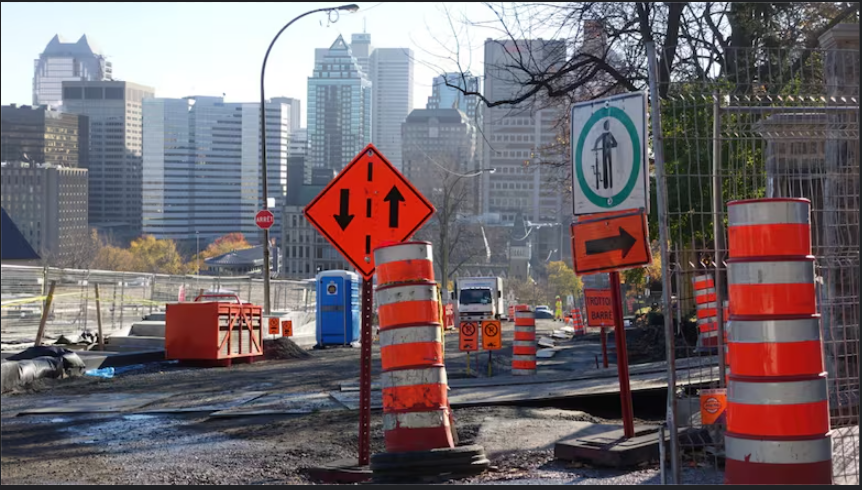
Construction Holiday
I will be spending this season in a traditional manner: missing my kids, brooding over absent “friends” and listening to a selection of songs to make the Hungarian Song “Gloomy Sunday” seem cheerfully optimistic. Oh, at some point I’ll blog about the upcoming re-release of They Came in Peace, my novel about an alien invasion with a twist.